what are some financial advice ontpeconomy – Smart Money Tips & Planning Guide
In today’s fast-changing economic environment, individuals and families search for reliable guidance to manage money effectively. A common question that many people ask is what are some financial advice ontpeconomy because economic conditions, inflation, and income opportunities continuously evolve. Understanding fundamental principles of budgeting, saving, and investing helps build stability and long-term growth. Financial awareness empowers people to make informed decisions and reduce unnecessary risks. Clear planning combined with disciplined habits creates a strong foundation for financial independence and security.
Importance of Financial Planning
Financial planning is the process of setting goals and creating structured strategies to achieve them. Many households struggle because they do not follow a consistent plan. Regular assessment of income, expenses, and future objectives ensures better control over resources. People often search for guidance and wonder what are some financial advice ontpeconomy to improve their financial situation and reduce uncertainty. Planning includes tracking monthly spending, setting short-term goals, and preparing for unexpected expenses. A well-designed financial plan increases confidence and reduces stress during economic changes.
Budgeting Strategies
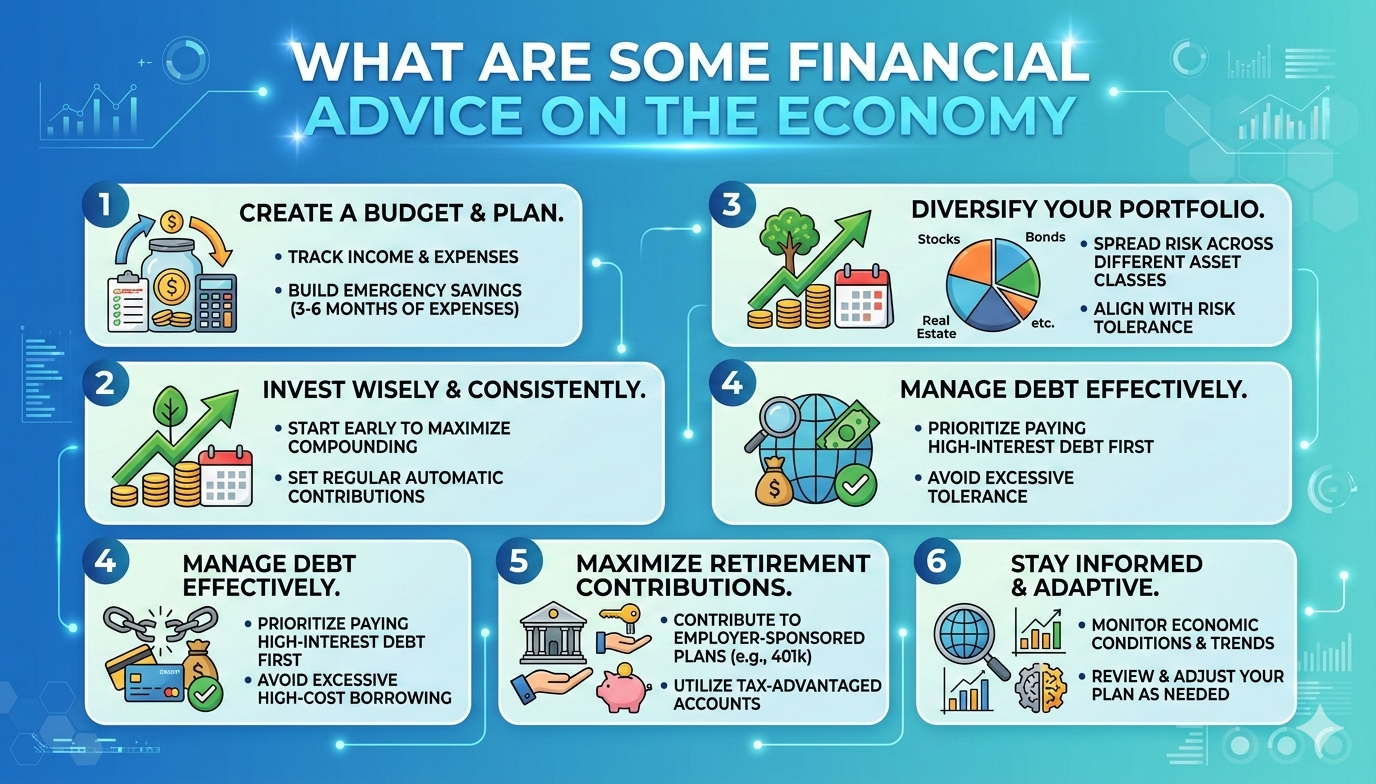
Budgeting is one of the most powerful tools for financial management. It allows individuals to understand where their money goes and how to allocate it efficiently. Creating a realistic budget requires tracking income and listing essential and non-essential expenses. When people ask what are some financial advice ontpeconomy, budgeting consistently appears as a primary recommendation because it builds discipline and transparency. Adjusting spending habits according to priorities helps avoid debt accumulation. Regular review of the budget ensures alignment with financial goals and lifestyle needs.
Saving and Emergency Funds
Saving money provides protection against unexpected financial challenges. An emergency fund acts as a safety net during job loss, medical expenses, or urgent repairs. Experts often recommend saving a portion of income every month to build financial security over time. Many individuals explore guidance online and question what are some financial advice ontpeconomy to strengthen their savings habits. Setting up automatic transfers to a dedicated savings account improves consistency. Having at least three to six months of living expenses saved reduces dependency on credit during emergencies. endbugflow, Feed by way, connecting to wifi, viral manners, networth.
Investment Basics
Investing helps money grow through assets such as stocks, bonds, mutual funds, or real estate. Instead of letting money remain idle, strategic investment increases wealth potential over the long term. Beginners frequently research strategies and ask what are some financial advice ontpeconomy when exploring investment opportunities. Diversification reduces risk by spreading investments across different asset classes. In the United States financial markets offer various investment platforms that support long-term growth and retirement planning. Understanding risk tolerance and market trends is essential before making investment decisions.
Investors should focus on patience and consistent contributions rather than short-term speculation. Researching companies, analyzing performance, and consulting financial experts can improve investment outcomes. Building a diversified portfolio minimizes losses during economic downturns and maximizes potential returns over time. financial guidance ontpeconomy
Debt Management
Managing debt responsibly prevents financial stress and credit problems. Loans, credit cards, and financing options can be useful when handled wisely but dangerous when misused. Individuals often seek solutions and consider what are some financial advice ontpeconomy to control debt effectively. Paying high-interest debt first reduces financial pressure and saves money on interest charges. Creating a repayment plan with fixed monthly installments improves accountability.
Avoiding unnecessary borrowing and using credit only for essential needs strengthens financial stability. Monitoring credit scores regularly also helps maintain access to better borrowing conditions in the future. Responsible debt management supports long-term financial growth and stability.
Income Diversification
Relying on a single source of income can create financial vulnerability. Diversifying income streams increases security and growth opportunities. People exploring ways to improve their earnings frequently analyze what are some financial advice ontpeconomy to expand financial resources. Additional income may come from side businesses, freelance work, investments, or passive income strategies.
Developing multiple revenue channels reduces risk during job instability or market fluctuations. Skill development and continuous learning enhance career advancement and open new earning possibilities. Income diversification strengthens overall financial resilience and supports future ambitions.
Risk Management and Insurance
Risk management protects assets and income from unexpected events. Insurance policies such as health, life, property, and disability coverage reduce financial losses during emergencies. Individuals often evaluate protection strategies and ask what are some financial advice ontpeconomy to secure their financial future. cwbiancavoyage, decoratoradvice, programgeeks, Stonecap3.0.34 Software, magazinoor
Proper insurance coverage prevents large financial burdens caused by accidents or medical issues. Comparing policies and understanding coverage terms ensures better protection at reasonable costs. Effective risk management combines prevention, insurance planning, and emergency preparedness to safeguard financial stability.
Retirement Planning
Planning for retirement requires long-term commitment and strategic investing. Starting early provides the advantage of compound growth and consistent savings accumulation. Many workers search for guidance and question what are some financial advice ontpeconomy to prepare for retirement comfortably.
Contributing to retirement accounts and employer-sponsored plans builds future financial independence. Monitoring retirement progress regularly ensures alignment with age, income, and lifestyle expectations. Early preparation reduces dependence on social support systems and strengthens personal security in later years.
Financial Discipline and Education
Financial discipline involves controlling spending habits and making informed choices consistently. Continuous education about money management improves decision-making skills. People often explore improvement strategies and ask what are some financial advice ontpeconomy to enhance their understanding of personal finance.
Learning from financial experts, books, online courses, and practical experience strengthens knowledge. Setting clear goals and reviewing progress regularly maintains motivation. Discipline combined with education creates sustainable wealth growth and long-term financial confidence.

Conclusion
Building financial stability requires careful planning, disciplined saving, smart investing, and responsible debt management. Throughout different stages of life, individuals benefit from understanding practical strategies and applying them consistently. The question what are some financial advice ontpeconomy reflects the need for structured guidance in managing money effectively. By focusing on budgeting, emergency savings, income diversification, and retirement preparation, people can achieve greater security and independence. Strong financial habits developed today create lasting benefits for the future and support overall economic well-being.
FAQs
Q1: Why is budgeting important for financial stability?
Budgeting helps track income and expenses, control spending, and ensure that money is allocated toward essential needs and future goals. It builds financial awareness and prevents unnecessary debt.
Q2: How much should I save for emergencies?
Financial experts often recommend saving at least three to six months of living expenses in an easily accessible account to handle unexpected situations without relying on credit.
Q3: What are the benefits of diversifying income?
Diversifying income reduces financial risk and increases stability. Multiple income sources provide protection during job loss or economic downturns and improve overall earning potential.
Q4: When should I start planning for retirement?
It is best to start retirement planning as early as possible. Early investments benefit from compound growth, which significantly increases savings over time.
Q5: How can I manage debt effectively?
Managing debt requires prioritizing high-interest payments, creating a repayment plan, avoiding unnecessary borrowing, and monitoring credit regularly to maintain financial health.